
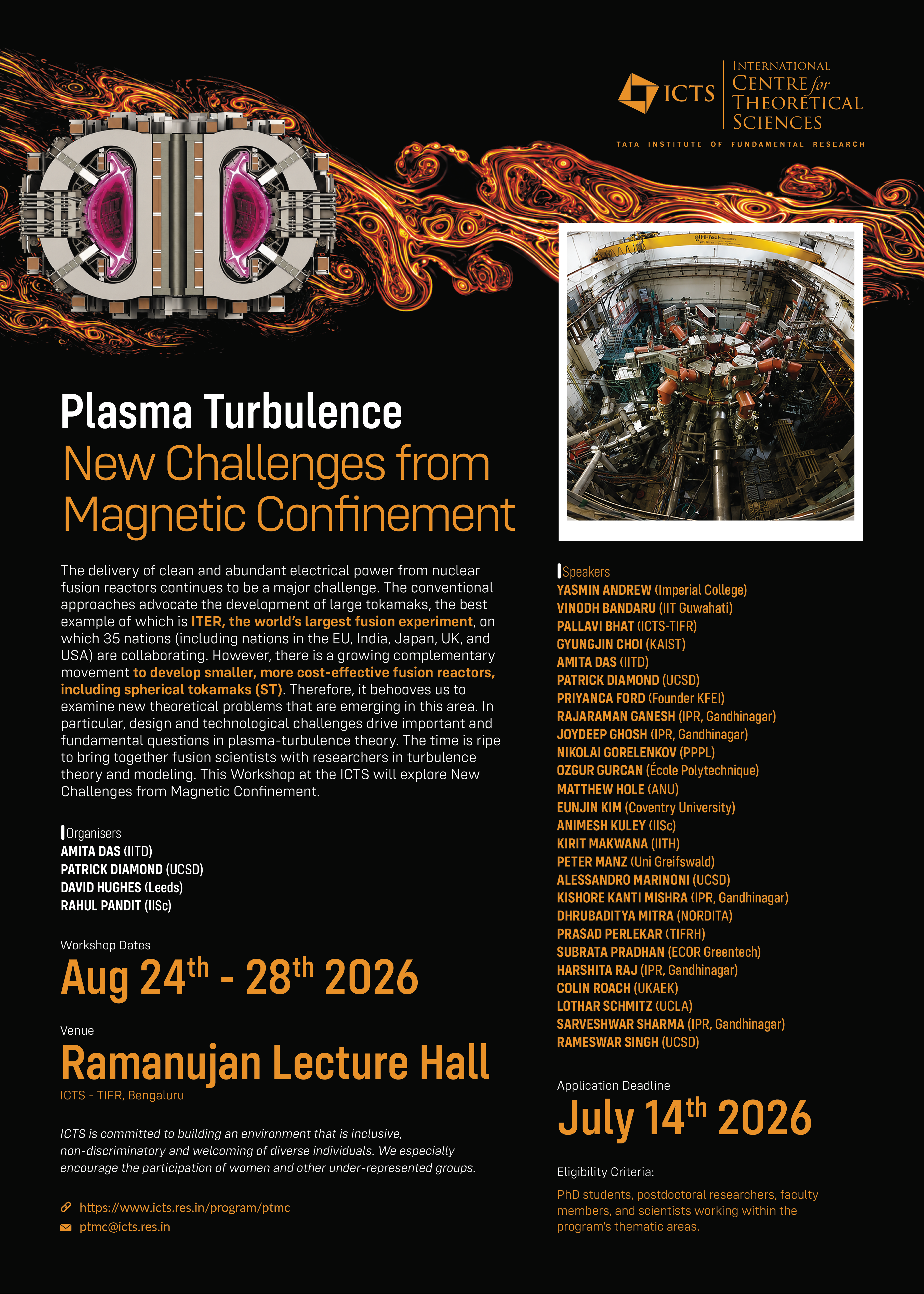
The delivery of clean and abundant electrical power from nuclear fusion reactors continues to be a major challenge. The conventional approaches advocate the development of large tokamaks, the best example of which is ITER, the world’s largest fusion experiment, on which 35 nations (including nations in the EU, India, Japan, UK, and USA) are collaborating [see, e.g., https://www.iter.org/ and https://fusionforenergy.europa.eu/], and laser-driven inertial confinement fusion [see, e.g., https://lasers.llnl.gov/news/fusion-ignition-and-the-path-to-inertial fusion-energy].
However, there is a growing complementary movement to develop smaller, more cost-effective fusion reactors, including spherical tokamaks (ST). Some important examples of these are:
1. USA:SPARC, at Commonwealth Fusion Systems (https://cfs.energy/technology/sparc) – in part derivative from the ALCATOR Program (A,C,C-Mod) at the Plasma Science and Fusion Center, MIT (https://www.psfc.mit.edu/sparc); see also: USA: Helion (https://www.helionenergy.com/);
2. UK: Mega Ampere Spherical Tokamak [MAST-U] (https://ccfe.ukaea.uk/programmes/mast-upgrade/); to be followed by STEP (Spherical Tokamak Energy Production). See also NSTX-U in USA;
3. China: BEST – anticipated next step after EAST – Experimental Advanced Superconducting Tokamak ( http://east.ipp.ac.cn/).
Several articles in the press have written about recent investments in commercial fusion. These small-fusion-reactor developments have been driven, in part, by the rapidly growing demand for electrical power in many industries, especially for AI. Loosely speaking, these compact devices fall into two categories: high-field, high-density tokamaks (SPARC, BEST), and spherical tokamaks (MAST-U, NSTX-U, STEP), which are typically high(er) β (with the plasma β = plasma pressure/magnetic pressure) than conventional tokamaks. A common issue for all compact devices is boundary control, as their small size leads to high power fluxes impinging on the plasma-facing component (PFC) surfaces.
Given these developments, it behooves us to examine new theoretical problems that are emerging in this area. In particular, design and technological challenges drive important and fundamental questions in plasma-turbulence theory. Indeed, the challenges of compact devices might well turn out to be more demanding than those that have been confronted while designing ITER. Good confinement alone is not sufficient. Turbulence control and optimization are required to achieve both good confinement and satisfactory power handling. The time is ripe, therefore, to bring together fusion scientists with researchers in turbulence theory and modeling from all parts of the world. ICTS is a logical venue, as India is a participant in ITER and has a significant number of experts in plasma theory, fluid dynamics, and turbulence. This Workshop at the ICTS will explore New Challenges from Magnetic Confinement.
Eligibility Criteria : PhD students, postdoctoral researchers, faculty members, and scientists working within the program's thematic areas.
Accommodation will be provided for outstation participants at our on campus guest house.
ICTS is committed to building an environment that is inclusive, non-discriminatory and welcoming of diverse individuals. We especially encourage the participation of women and other under-represented groups.
 icts
icts resin
resin